




How to Protect Color-Treated Hair Without Extra Heat
Fresh color can make your hair feel brand new. Keeping it looking that way is another story.
Whether you color your hair at home, visit the salon for highlights, cover grays, brighten your natural shade, or completely change your color, what happens between appointments matters. Washing, drying, styling, sun exposure, and everyday heat can all affect how long your color looks vibrant and how your hair feels.
Explore RevAir

And while reaching for more heat might make styling faster or help smooth the hair temporarily, color-treated hair doesn't necessarily need more heat.
It needs a routine that works smarter.
Why Does Color-Treated Hair Need Extra Care?
Hair color works by changing what's happening within or on the surface of the hair. Depending on the type of color you use, the process may lift the hair's cuticle, remove some of its natural pigment, deposit new pigment, or do a combination of all three.
Permanent color and lightening services can leave hair more porous than it was before. That means your hair may absorb moisture quickly but also lose it more easily.
You might notice:
- Hair feels drier than it did before coloring
- Ends become rough or brittle
- Frizz is more noticeable
- Hair tangles more easily
- Color seems to fade faster than expected
- You rely on heat styling more often to get the finish you want
That last one can create a frustrating cycle. Hair feels harder to manage, so you use more heat. More heat can contribute to dryness and damage, which can make the hair feel even harder to manage.
The goal isn't necessarily to eliminate heat completely. It's to be more intentional about how much heat you're using, how often you're using it, and where you can reduce unnecessary exposure.
1. Turn Down the Water Temperature
Your color-protection routine starts before you ever pick up a styling tool.
Very hot showers may feel great, especially once the weather gets cooler, but your hair doesn't need scalding water to get clean.
Wash and rinse with lukewarm water instead. It can be gentler on both your hair and scalp while still allowing your shampoo and conditioner to do their jobs.
You don't have to finish every wash with an icy-cold rinse, either. Comfortable, lukewarm water is enough.
2. Don't Wash Your Hair More Often Than You Need To
Every wash exposes your hair to water, shampoo, friction, detangling, drying, and another round of styling.
For color-treated hair, reducing unnecessary wash days can also mean reducing unnecessary styling days.
How often you need to shampoo depends on your scalp, hair type, lifestyle, styling products, and personal preference. There isn't one schedule that works for everyone. If you're still trying to find your ideal schedule, our guide to how often you should really wash your hair can help you look at the factors that matter instead of forcing your hair into an arbitrary routine.
Instead of forcing your hair into a specific routine, pay attention to what it actually needs.
If your scalp and hair still feel good, you may not need to wash simply because it's been a certain number of days.
3. Use Products Made With Color-Treated Hair in Mind
Your shampoo and conditioner don't have to be complicated, but they should support what your hair needs now, not what it needed before you colored it.
Look for formulas designed for color-treated hair and consider adding moisture where your hair needs it most.
That might include:
- A moisturizing conditioner
- A weekly hair mask
- A leave-in conditioner
- A lightweight hair oil or serum for the ends
- A heat protectant when using heated styling tools
Color-treated hair can vary dramatically from one person to another. Fine highlighted hair may need something completely different from dense curls that have been permanently colored.
Choose products based on your hair, not just the words "color-treated" on the bottle.
4. Rethink How You Dry Your Hair
Drying is one of the easiest places to rethink your heat exposure.
Traditional blow-drying often combines hot air with repeated brushing and tension to stretch and smooth the hair. Depending on your hair type, density, and desired result, that can mean working through the same sections repeatedly.
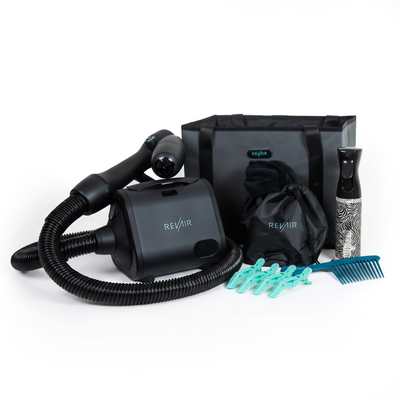
Another option is using reverse-air technology to dry and stretch hair at the same time. The RevAir Reverse-Air Dryer uses reverse-air suction to draw hair into the wand, where it dries from root to end using controlled airflow and lower temperatures than many traditional high-heat styling methods. If you're weighing different drying methods, we break down RevAir vs. traditional hair dryers and how the drying experience differs.
The RevAir Reverse-Air Dryer uses reverse-air suction to draw hair into the wand, where it dries from root to end using controlled airflow and lower temperatures than many traditional high-heat styling methods.
There's no brush required to create tension while drying.
For color-treated hair, that can help simplify the drying step before you decide whether you even need another styling tool.
5. Make Your Drying Step Do More of the Styling Work
One of the easiest ways to use less heat overall is to get your hair closer to its finished state during the drying process. In fact, how you dry your hair can play a major role in your anti-frizz foundation, before serums, oils, or finishing products ever enter the picture.
If you're planning to wear your hair stretched, smooth, curled, wrapped, braided, or in another finished style, think of drying as part of the styling process rather than something you have to get through before styling begins.
The more your drying method can help you achieve the foundation you want, the less work may be required afterward.
With RevAir, you can dry, stretch, and smooth in one step. Depending on your hair and desired finish, you may find that you don't need to follow with another heated tool at all.
And when you do want a more polished finish, starting with properly dried and stretched hair can help make the next step more intentional.
6. Save Higher Heat for When It Actually Matters
Not every section of your hair needs the same treatment.
If you use a flat iron or other hot tool after drying, resist the temptation to automatically choose the highest temperature.
Start lower and increase only if your hair actually requires it.
You can also focus your finishing work where it makes the biggest visual difference. Maybe your roots need a little more attention. Maybe it's your ends. Maybe a few face-framing pieces are all you want to refine.
You don't necessarily need to repeatedly heat-style every strand just because you're using a hot tool.
Fewer unnecessary passes mean less cumulative heat exposure.
7. Give Your Color a Break Between Full Styling Days
Your hair doesn't have to be freshly styled every morning.
A little planning at night can help preserve the work you've already done.
Depending on your hair and style, that might mean:
- Wrapping your hair before bed
- Using a satin bonnet
- Sleeping on a satin or silk pillowcase
- Loosely braiding or twisting longer hair
- Using rollers to reshape sections
- Refreshing only the areas that need attention
The goal is simple: protect today's style so you don't have to recreate it tomorrow.
A satin bonnet, for example, can help reduce the friction that happens while you sleep and help preserve your style between wash days.
[Shop the RevAir Satin Bonnet →]
8. Protect Your Hair From More Than Styling Tools
Heat styling isn't the only thing that can affect color-treated hair.
UV exposure, chlorine, salt water, dry air, friction, and environmental conditions can all influence how your hair looks and feels.
If you're spending a lot of time outside, consider protecting your hair with a hat or scarf. Before swimming, wetting your hair with clean water and using a leave-in product can help reduce how much pool or salt water your hair absorbs.
Afterward, rinse thoroughly rather than letting chlorine or salt sit on your hair for hours.
Small habits can add up, especially when you're trying to stretch the time between color appointments.
Does Color-Treated Hair Have to Avoid Heat Completely?
No.
Protecting color-treated hair isn't about creating a list of styling tools you're never allowed to use again.
It's about managing cumulative exposure.
One high-heat styling session isn't the same as repeatedly exposing your hair to high temperatures every day. And using a hot tool intentionally isn't the same as making multiple unnecessary passes over the same section.
Think about your entire routine.
Where can you lower the temperature?
Where can you eliminate a step?
Where can you preserve yesterday's style instead of starting over?
Where can one tool do the work of two?
Those changes can make a much bigger difference than chasing a perfectly "heat-free" routine that doesn't actually work for your hair or lifestyle.
Build a Routine Your Color Can Live With
Color-treated hair doesn't have to mean fragile hair, and protecting your color doesn't have to mean giving up the styles you love.
Start with the steps you repeat most often.
Wash only when your hair needs it. Keep your water temperature reasonable. Give your hair the moisture it needs. Protect your style overnight. And when it's time to dry, consider whether you really need to reach for high heat to get the result you want.
The best color-protection routine isn't necessarily the one with the most products or the most rules.
It's the one you can actually keep doing.
Keep Reading
The Silk Press Guide for People Who Are Done With Heat Damage
Does Your Hair Need Protein or Moisture? Here's How to Tell
Air Drying vs. Blow Drying: Which Is Better for Your Hair?


